How to Build a Security Packet That Wins Enterprise Deals
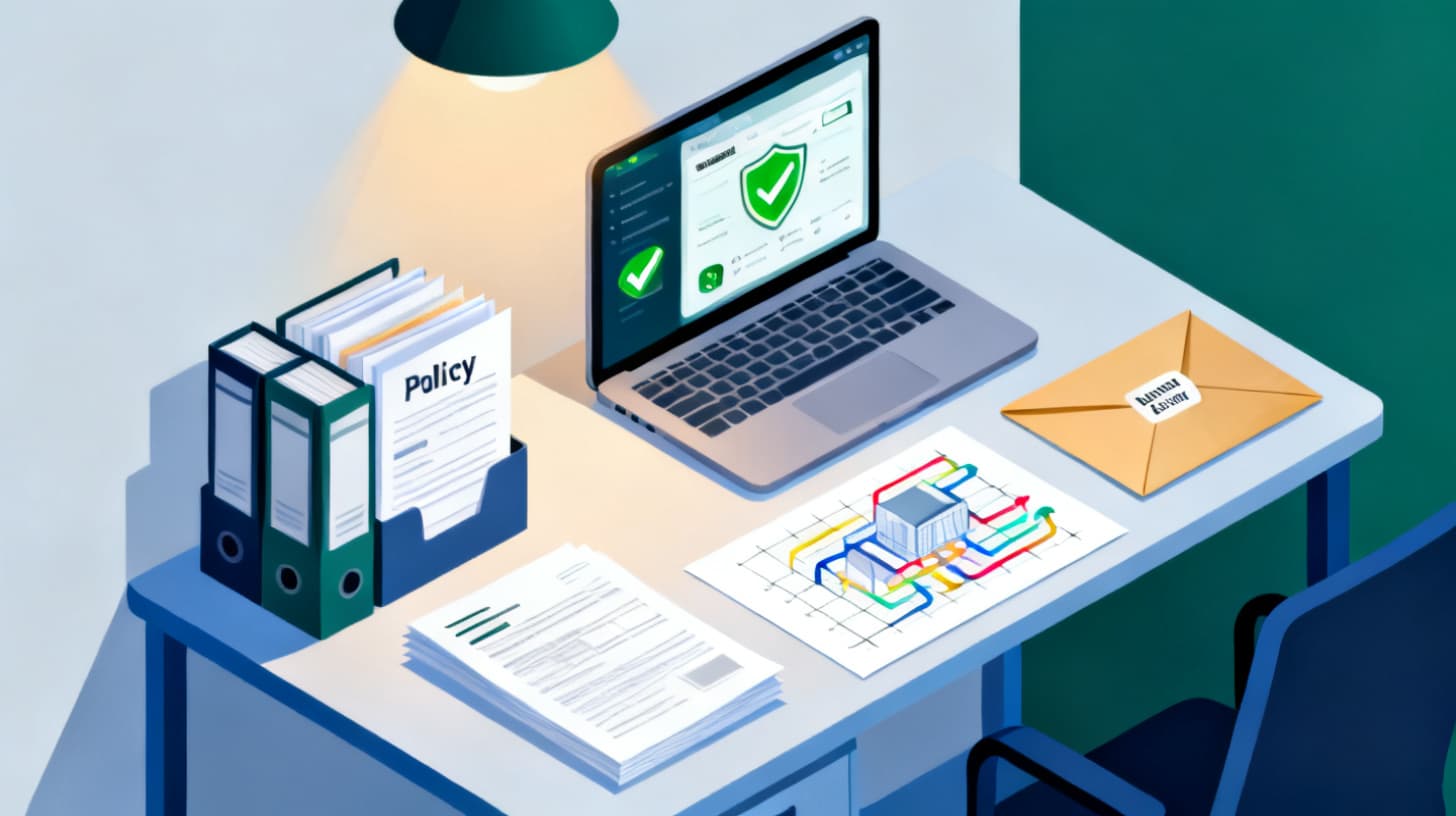
Learn how to build a security packet that wins enterprise deals without SOC 2. Get policies, pentest reports, and questionnaire answers that buyers trust.
Your startup just landed a meeting with a Fortune 500 prospect. The demo went great. The champion is excited. Then procurement drops the bomb: "We'll need your SOC 2 Type II report, penetration test results, and full security documentation before we can move forward."
Your stomach sinks. You don't have SOC 2. You don't have a formal pentest report. Your "security documentation" is a handful of internal wiki pages nobody has updated since launch. The deal stalls, and your competitor with a shinier compliance badge swoops in.
This scenario plays out thousands of times a year across startups trying to sell into the enterprise. But here's what most founders don't realize: you don't need SOC 2 to close enterprise deals. What you need is a compelling, well-organized security packet that demonstrates your commitment to protecting customer data, maps your controls to recognized frameworks, and gives the buyer's security team enough confidence to approve you as a vendor.
Building that packet is more achievable than you think. With the right structure, the right policies, and evidence of actual security testing, you can pass enterprise security reviews and close deals while your SOC 2 audit is still months away. Let's break down exactly how to do it.
What Enterprise Buyers Actually Want (and Why SOC 2 Isn't the Only Answer)
Before you scramble to assemble documents, it helps to understand what's really happening on the other side of the table. Enterprise security reviews aren't a single checkbox exercise. They're a risk assessment. The buyer's security or procurement team is trying to answer one question: "If we give this vendor access to our data or systems, what's the likelihood something bad happens?"
SOC 2 Type II is popular because it provides a standardized, auditor-verified answer to that question. But it's not the only answer, and seasoned security reviewers know that. What they're looking for falls into a few categories.
First, they want to see governance and policy maturity. Do you have written policies covering access control, data classification, incident response, encryption, and business continuity? These policies signal that your company has thought deliberately about security risks, not just reacted to them. The policies don't need to be 50 pages each. They need to be clear, specific to your environment, and actually followed.
Second, they want evidence of technical controls. This means vulnerability scanning or penetration testing results that prove you're actively looking for weaknesses. It means encryption at rest and in transit. It means access management practices like multi-factor authentication and least-privilege access. Many buyers will accept recent pentest reports and scan summaries as strong evidence, even without SOC 2.
Third, they want responsiveness. When they send you a security questionnaire with 200 questions, how quickly and thoroughly do you respond? A vendor that takes three weeks to answer a questionnaire signals organizational immaturity. A vendor that responds in days with clear, sourced answers signals a company that takes security seriously.
The NIST Cybersecurity Framework 2.0 Small Business Quick-Start Guide provides an excellent baseline for small and mid-sized companies building their first security program. It organizes controls into six functions: Govern, Identify, Protect, Detect, Respond, and Recover. When your security packet maps to these functions, even without a formal SOC 2 report, you're speaking the language enterprise reviewers understand.
Here's the practical insight most startups miss: a well-organized security packet with real evidence often outperforms a bare SOC 2 report. SOC 2 Type II tells the buyer what was true during an audit window. A living security packet with fresh scan results, current policies, and a completed questionnaire tells them what's true right now. Many security teams appreciate that more than a compliance certificate that might be six months stale.
The Anatomy of a Winning Packet
A security packet that wins deals typically includes five core components:
- 1.A security overview or trust document summarizing your security posture in plain language
- 2.A policy library covering the major control domains (access control, encryption, incident response, vendor management, data retention, and more)
- 3.Penetration test and vulnerability scan reports showing you test your systems and fix what you find
- 4.A system architecture diagram that maps data flows and trust boundaries
- 5.Completed security questionnaire responses tailored to the buyer's specific questions
The rest of this guide walks through how to build each component, even if you're starting from zero.
Building Your Policy Library and Trust Documentation From Scratch
Let's start with the piece that makes most founders groan: policies. Writing security policies feels bureaucratic. It feels like something big companies do, not something a 15-person startup should spend time on. But policies are the foundation of your security packet because they answer the buyer's most basic question: "Does this company have a plan for how they handle security?"
The good news is you don't need to write policies from scratch on a blank page. What you need are templates grounded in recognized frameworks that you then customize to reflect your actual environment and practices.
Choosing the Right Policy Coverage
For most enterprise security reviews, you'll want policies covering at least these domains:
- Access Control Policy covering how you grant, review, and revoke access to systems and data
- Data Classification and Handling Policy explaining how you categorize data sensitivity and protect each tier
- Encryption and Cryptography Policy detailing your approach to encryption at rest, in transit, and key management
- Incident Response Policy describing how you detect, escalate, contain, and recover from security incidents
- Business Continuity and Disaster Recovery Policy outlining your plans if systems go down
- Acceptable Use Policy setting expectations for employee behavior on company systems
- Vendor Management Policy explaining how you evaluate third-party risk
- Change Management Policy describing how code and infrastructure changes are reviewed and deployed
This isn't an exhaustive list, but it covers the domains that appear on virtually every enterprise security questionnaire and vendor risk assessment. You can browse a security policy library mapped to SOC 2, ISO 27001, HIPAA, and GDPR frameworks to see the full range of templates that map to these compliance frameworks.
When customizing templates, avoid two common mistakes. First, don't leave template language that clearly doesn't apply to your environment. If you're a cloud-native SaaS company, your physical security policy shouldn't describe badge readers and security guards at a data center you don't operate. Second, don't make policies aspirational. If you haven't implemented quarterly access reviews yet, don't write a policy claiming you do them. Instead, note that the practice is planned and include a target implementation date. Honesty builds more trust than fiction.
Creating a Security Overview Document
Beyond individual policies, create a one-to-two page security overview that serves as the "executive summary" of your security program. This document is often the first thing a reviewer reads, so make it count.
A strong security overview covers:
- Infrastructure and hosting: Where your application runs (AWS, GCP, Azure), the security certifications of your hosting provider, and your deployment model
- Authentication and access: How users authenticate (SSO, MFA), how you manage internal access, and your approach to least privilege
- Data protection: Encryption standards (TLS 1.2+ in transit, AES-256 at rest), data residency, and backup practices
- Security testing: Your approach to vulnerability scanning, penetration testing, and how you handle findings
- Compliance roadmap: Where you are on your compliance journey, including any current certifications and planned milestones like SOC 2 readiness
This document does heavy lifting because it frames the conversation. Instead of the reviewer discovering your security posture piecemeal through a questionnaire, you proactively tell them the story. That control over narrative matters more than most founders realize.
Generating Pentest Reports and Scan Evidence That Reviewers Trust
Policies tell the buyer what you intend to do. Pentest reports and scan results prove you're actually doing it. This is where many early-stage companies hit a wall, because traditional penetration testing is expensive, time-consuming, and often overkill for a startup that just needs credible evidence of security testing.
Let's talk about what reviewers actually look for in testing evidence and how to produce it efficiently.
What Makes a Pentest Report Credible
Enterprise reviewers evaluate pentest reports on several dimensions. They want to see scope clarity, meaning exactly which systems, domains, and API endpoints were tested. They want methodology description, showing that the testing followed a recognized approach like OWASP or PTES. They want findings with severity ratings, ideally mapped to categories like the OWASP Top 10. And they want remediation evidence, showing that critical and high-severity findings were addressed.
A report that says "we ran a scan and found nothing" actually raises more red flags than a report showing five medium-severity findings that were all remediated. Buyers expect imperfect results. What they don't trust is a clean bill of health from testing that appears superficial.
The most efficient path for startups is to combine automated scanning with targeted testing. Run vulnerability scans against your approved targets to establish a baseline, then layer in more focused testing on authentication flows, authorization boundaries, API security, and business logic. The combination produces a report that's both comprehensive and credible.
Pentest Today lets you start a scan on approved targets and walk into your security review with evidence already generated, including severity-rated findings, OWASP categorization, and remediation guidance. The output maps directly to what reviewers expect in a pentest report.
Once you have findings, don't just fix them and move on. Document the remediation. Create a brief remediation summary for each critical and high finding showing the original vulnerability, the fix applied, and the retest confirmation. For a deeper guide on this process, check out this walkthrough on what to do after a pentest to build a remediation sprint. That remediation documentation becomes powerful evidence in your security packet because it shows your security program is a living process, not a one-time event.
Architecture Diagrams and Data Flow Documentation
A system architecture diagram might seem like a nice-to-have, but it's increasingly a required component of enterprise security reviews. Reviewers use it to understand your attack surface, identify where sensitive data flows, and evaluate whether your security controls are placed at the right boundaries.
Your diagram should show:
- Client applications (web, mobile) and how they connect to your backend
- Load balancers, API gateways, and WAF layers
- Application servers and their communication patterns
- Database systems and where encryption is applied
- Third-party integrations and data sharing boundaries
- Authentication and authorization enforcement points
Keep it clean and readable. A cluttered diagram with 50 boxes and 200 arrows is less useful than a focused diagram that clearly shows the major components and trust boundaries. Tools that generate Mermaid-based diagrams from your infrastructure description can produce clean, consistent output without requiring a designer.
Answering Security Questionnaires and Assembling the Final Packet
You've built your policies. You have pentest evidence. Your architecture diagram is clean. Now comes the final challenge: responding to the buyer's security questionnaire and packaging everything into a professional, easy-to-navigate packet.
Security questionnaires range from 50-question SIG Lite assessments to 400-question CAIQ or custom enterprise questionnaires. They cover everything from physical security to software development lifecycle to employee security awareness training. Answering them thoroughly and accurately is where deals are won or lost.
Strategies for Efficient, High-Quality Responses
The biggest mistake startups make with questionnaires is treating every question as a standalone exercise. Instead, build a response library. Create canonical answers for the 80-100 questions that appear on nearly every questionnaire, then adapt them for each buyer's specific format and wording.
Your canonical answers should be:
- Specific, not vague. Instead of "We use encryption," write "All data at rest is encrypted using AES-256. All data in transit uses TLS 1.2 or higher. Encryption keys are managed through our cloud provider's KMS with automatic rotation."
- Evidence-linked. Reference the specific policy or document that supports each answer. "See Access Control Policy, Section 3.2" gives the reviewer a thread to pull.
- Honest about gaps. If you haven't implemented a specific control, say so clearly and describe your plan. "We do not currently perform annual tabletop exercises for our incident response plan. This is planned for implementation as part of our SOC 2 readiness program." That transparency builds more credibility than a misleading "yes."
For questions outside your canonical library, develop a triage process. Flag questions you can answer immediately, questions that need research, and questions where "not applicable" is the honest answer (for example, physical data center security when you're fully cloud-hosted).
Many startups find that AI-assisted questionnaire answering dramatically speeds up this process. The key is having your policies, scan results, and architecture documentation already structured so the AI can pull accurate, sourced answers. If you want a deeper look at this workflow, this guide on passing your first enterprise security questionnaire walks through the full approach.
Packaging and Presentation
How you present your security packet matters almost as much as what's in it. A disorganized collection of PDFs and Google Docs signals chaos. A clean, branded packet signals professionalism.
Structure your packet with a clear table of contents:
- Security overview (1-2 pages)
- Policy library (individual policy documents)
- Penetration test report with remediation summary
- Vulnerability scan results
- System architecture diagram
- Completed security questionnaire
- Compliance roadmap (optional but powerful)
Export policies and reports as PDFs for a consistent, professional look. If you have a compliance roadmap showing planned milestones for SOC 2, ISO 27001, or other certifications, include it. It transforms your lack of SOC 2 from a weakness into a narrative of progress.
One final tip: proactively send your security packet before the buyer asks. When you reach the procurement stage, email the security team directly with your packet and a note saying you're happy to schedule a call to walk through any questions. That proactive move signals maturity and confidence. It puts you ahead of competitors who scramble to respond reactively.
Enterprise deals don't require perfection. They require evidence of intention, competence, and continuous improvement. A startup with a well-built security packet, real pentest findings and remediations, and honest questionnaire responses will outperform a larger competitor with a stale SOC 2 report and no appetite for transparency.
Start building your packet today. See how PentestToday helps you generate the pentest reports, scan evidence, policies, and questionnaire answers you need to pass your next enterprise security review and close the deal.
Get a Pentest in 24 hours or less
Our agent swarm and human experts test your endpoints and deliver an audit, fast.